
Mastodon

Posts in "article"

Letters I Will Never Send

How I Use My Notebooks: Writing Letters Without Posting Them:

Since November 2023 I have picked up a new habit of sorts – writing letters without posting them.

What a great idea! I believe it is incredibly important to think on paper. Writing things down helps us process tangled thoughts and complex feelings that we otherwise may not know what to do with.

Like the article above describes, writing a handwritten letter to someone you know, whether they are alive or have passed away may be the key. Having a purpose and a specific audience in mind helps me organize my thoughts. It allows me to develop them in a way that ultimately brings me clarity and peace.

When you lose someone close to you, you quickly realize how many things you still want to share with them. I lost my mom to cancer in 2011, and not a single day goes by without me thinking of something I wish I could tell her. Sometimes I just want to reminisce about a sudden memory. Other times, I feel a strong urge to ask for her advice on life’s complex situations.

Even though she will never read it, sitting down to write her a letter might just give me the outlet I need. The next time I feel that heavy desire to get something off my chest, I am going to pick up a pen and give it a try.

#writing #analog
Rethinking How I Blog

One day, out of the blue, I decided to start a blog… this blog… using Micro.blog. At first, I was super excited to post just about anything. Then I tried to make it more formal and managed to sustain a streak of over 100 days without skipping a beat.

Towards the end, though, I felt a bit stressed. It felt like I had to post something, even if I wasn’t feeling up to it. Honestly, it started to feel like a chore. It bothered me because I truly enjoy writing and posting.

I finally decided it was okay to miss a day after I was forced to skip one due to a power outage. One day turned into three. Now I’m okay posting whenever I really have something to say, rather than hunting for content just to hit publish.

Apparently, I’m not the only one who feels this way. I found an article by Matt Webb that discusses 15 different rules he came up with for his personal blog. Although most of his rules are excellent, some resonated with me more than others. I recommend you check out his whole article and keep reading to see what stood out for me.

  • Three posts a week, more or less.
  • One idea per post.
  • If I’m getting in a twist about a sentence, take it out.
  • Give up on saying anything new.
  • Give up on trying to be popular.
  • Give up on trying to be interesting… just say what I think about whatever I’m thinking about.
  • Only write what’s in my head at that exact moment. It’s 10x faster.
  • If it’s taking too long to write, stop.
  • Don’t use a post just to link to something elsewhere. If there’s a point to make, start with that.
  • Titles should be descriptive and have the flavour of the post. And rewrite the lede once the post is done so the whole thing gets to the point faster.
  • It’s okay not to blog if it feels like a chore.

I plan to follow these rules in whole or in part to make my blog more authentic and compelling to read, while keeping it fun for myself.


#Blogging #Writing #MicroBlog

Does Your Life Really Flash Before Your Eyes?

When You Die, Does Your Life Actually Flash Before Your Eyes?

It is a common trope in storytelling that when someone dies, or has a near death experience, they see their life flash before their eyes. It seems, however, that this trope has a basis in reality.

I know it can be a bit morbid to think about, but it is fascinating that scientists have been able to detect surges in brain activity 30 seconds before and 30 seconds after someone dies. Could our life’s memories really be flashing “before our eyes” in those final moments?

The article linked above goes on to say that one does not have to be dying for this phenomenon to occur; a near-death experience can trigger the same response. Then again, it is not true for every person. In fact, researchers seem to have observed this activity in about 50% of patients. While the sample size was limited, the results offer a compelling glimpse into how the human brain functions at the very end.

It still makes me wonder what makes the difference. Why do some people seem to have that surge, while others don’t?

Your Old Pennies Just Became More Valuable

Pennies With Purpose: Smart and Simple Ways to Use the Disappearing Coin

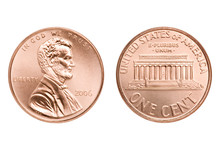
with the discontinuation of penny production, some brick-and-mortar businesses across the country have been unable to give back exact change because they lack sufficient pennies, if any at all.

The other day, I published a post on the end of the US penny. In that post, one of the things I was wondering was what would happen to the penny. Would it just disappear and be forgotten? No! On the contrary, it has become a sought-after item. Stores want you to dig through those couch cushions and find all the pennies you can. In fact, they make it worth your while if you bring them in. Some stores even offer you twice the value of the penny in store vouchers.

That’s not all, though. Collectors are looking for those rare gems too.Not to mention the trivia the penny brings with it. For example, did you know that it costs about 3.7 cents to make a penny?That’s one of the main reasons it’s being discontinued. Or, the fact that President Lincoln is the only “head” on a coin that faces right. Another favorite mentioned in the article above is that pennies land on “heads” about 80% of the time because Lincoln’s head protrudes so much from the face of the coin.

All of these cool things are going to make me miss the penny even more, I think.

Could a Modern iPod Actually Work Today?

Could Apple Bring Back The iPod For A Special Anniversary Edition?

…Apple released the iPhone Pocket a day after the iPod turned 24. That said, could the company bring back its iconic product for a special anniversary edition in 2026, when it completes 25 years?

Yes, please! Maybe it’s because I’ve been on a music rediscovery kick lately with my (new) Sony Walkman, but I think this would be an awesome idea. How cool would it be if Apple reintroduced the iPod Classic to celebrate its 25th anniversary? I don’t think they would do it, but it would be cool.

I have my old iPod Classic and it still works, so instead of having Apple bring back the old iPod Classic purely for nostalgia purposes, what if they brought back an entirely new dedicated music player? It would have to be something that entices audiophiles and casual listeners alike. With the resurgence of physical media being purchased by younger generations, I don’t see this as a stretch.

Imagine Apple releases an iPod that’s like the Classic in that it has one purpose: to play music at the highest quality possible. I think they have a real shot because younger people are buying vinyl, Blu-rays, DVDs, and old CDs to go back to a simpler time. It’s like they’re trying to experience something new, because to them, streaming services are “so yesterday.” They want to try something cool, like listening to vinyl or busting out a Sony Walkman like I did and enjoying that for an evening.

Maybe it’s not nostalgia for them but something genuinely new that sparks their interest. I think they’d be hooked because they wouldn’t have to listen to the compressed streaming quality they may be used to. Instead, they’d get high-quality lossless audio that I’m sure Apple could deliver in an iPod 2026 edition. What a cool thought experiment. I’m all in.

The End of an Era: No More Pennies

The Last 5 Pennies Ever Made Have a Special Mark and Could Sell for Big Bucks

The US Mint brought more than two centuries of penny production to a close last week

In case you missed it, the US Mint will no longer make any more pennies. First minted in 1793 and changed to the design we’re most familiar with in 1809, the penny has officially reached the end of its production run. However, there are about 300 million still in circulation. The last five pennies ever minted will feature a special omega symbol on them. Unfortunately, they won’t be released into circulation by the Philadelphia mint. Instead, they’ll be auctioned off. Some experts say they may go for tens of thousands of dollars, while others are claiming they’ll probably fetch anywhere from $2 million to $5 million per coin.

Funny that I came across this CNET article (linked above) because my wife and I were talking about exactly this on the way home today. I told her I was a little sad to see the penny come to an end because it’s always been around. Now that they’re not being made anymore, I’m sure we’ll all try to keep whatever pennies come across our path from now on. Maybe people will even stop, bend down, and pick up a penny or two from now on. Maybe people won’t even throw them in those fountains at the mall to make a wish?

The End of "Seeing Is Believing"

Deepfake Videos Are More Realistic Than Ever. Here’s How to Spot if a Video Is Real or AI

Remember when “fake” on the internet meant a badly Photoshopped picture? Ah, simpler times. Now, we’re all swimming in a sea of AI-generated videos and deepfakes, from bogus celebrity videos to false disaster broadcasts, and it’s getting almost impossible to know what’s real.

Not too long ago, whenever you saw a photo or video, it was safe to assume it was real. Sure, you probably knew it had been touched up a bit or cropped for emphasis, but overall, you could believe what you were seeing. Then you started scrutinizing photos more carefully when composites became common, and even more so when Photoshop made it possible to remove or insert objects and people who weren’t in the original image. The only comfort we had was that these skills were limited to a select few. Otherwise, it was easy to spot the imperfections that gave away a fake.

Then came videos. When watching a movie, we assumed most of it was enhanced or outright faked, and we called it movie magic. We knew the context and situation we were putting ourselves into, so we expected it and allowed ourselves to be fooled for enjoyment and entertainment.

Somewhere down the road, AI-generated videos started appearing. The most popular one was probably the Will Smith eating spaghetti video from 2023. It was clearly fake and easy to spot because of its low quality and uncanny valley appearance. Other videos were easy to identify because AI struggled with rendering hands. They always looked weird, sometimes with six fingers, which was a dead giveaway.

Since then, AI has gotten significantly better at creating images and videos. You can still spot them, but it’s much harder now.

This CNET article linked above offers some suggestions for spotting fake AI-created images and videos. Basically, trust your gut. If something looks too perfect or oddly off, it’s probably fake. Another suggestion is to run it through a metadata checker, where responsible companies will indicate if content was AI-generated. However, they acknowledge that most people won’t take that extra step. Looking for watermarks from companies like Sora or Google can also help identify AI content. The problem is you’re depending on creators to insert those watermarks. Usually, those aren’t the ones you need to worry about since they’re mainly for entertainment.

The real danger comes from content designed to convince you of something fake by passing it off as real. Those are the ones you need to scrutinize carefully and make your own judgment about whether what you’re seeing is true. Check your sources and verify information through other means to confirm what’s being portrayed is actually real. Don’t take things for granted, and please educate others. I’m thinking especially of older generations who may not be up to speed on these capabilities and could be easily fooled. I’m not saying they’re less intelligent than us because any of us can be fooled by this at any time. Let’s continue to look out for one another.

Rubber Ducky

What Is A USB ‘Rubber Ducky’?

It’s frightening to know you can plug in a regular-looking USB drive and suddenly your computer is taken over.

Have you ever found a random thumb drive and thought it was your lucky day? Well, after reading this article, you’ll think twice before inserting any random thumb drive into your computer.

Here’s why: these thumb drives can contain malicious payloads. Some attackers intentionally drop thumb drives in parking lots and other public places, hoping someone will pick one up and plug it into their computer to see what’s on it. Security experts call these intentional drops “candy drops” or “baiting attacks.”

When you plug one of these bad boys in, a script runs automatically, and your computer could be compromised. These attacks often use keystroke injection techniques that can enable tools like PowerShell and execute commands that take over your system.

Stay safe and practice smart computing habits. Don’t plug anyone’s thumb drive into your computer, and avoid using random USB ports in hotels or at airports for charging.

You never know what’s on the other side. It might just be a rubber ducky (a device that looks like a normal USB drive but acts as a malicious keyboard when plugged in).

The Zipper Is Getting Upgraded

The Zipper Is Getting Its First Major Upgrade in 100 Years

The teeth were redesigned, the manufacturing process rewritten, and new machinery developed to attach the closure to garments.

Those days of pesky zippers getting stuck and you having to fight with your kids’ jackets or book bags may have come to an end, if these new zippers become ubiquitous.

No one ever really thinks about the different zippers we use in our everyday garments, but you always notice them when they fail. With these new lighter and more eco-friendly zippers, maybe we can continue to overlook them again. They seem like a pretty cool improvement.

Why Don't We Feel the Earth Moving?

Why can’t we feel the Earth moving?

Right now, you’re zooming through space at incredible speeds. As just one of all the living creatures on Earth, you’re along for the ride…

If the Earth is moving, why don’t we feel it? This is exactly the kind of question my students ask, and it’s a completely logical one. After all, Earth isn’t sitting still. It’s traveling around the Sun at over 67,000 miles per hour, while simultaneously spinning on its axis at roughly 1,000 miles per hour. So if Earth is in constant motion, why don’t we feel it?

The short answer: we don’t feel it because we’re moving with it at the same speed. Gravity holds us securely to the surface, preventing us from flying off into space. Like the article points out, think of it like Earth giving us a constant “hug.”

Another helpful analogy, from the article, is air travel. When you’re on a plane cruising at hundreds of miles per hour, you don’t feel like you’re moving. It’s stable enough to walk around, read a book, or enjoy a drink. You only notice the motion when the plane encounters turbulence or changes speed suddenly.

Earth works the same way. It moves at such a smooth and constant pace that we never feel it. However, if it suddenly slowed down or sped up, we’d definitely notice. Fortunately, that hasn’t happened (at least not to my knowledge).

Here’s something even more mind-blowing: the Sun is also in motion, traveling at approximately 514,000 miles per hour as it orbits the center of our galaxy.

That makes sense when you consider its massive size. In fact, about 1.3 million Earths could fit inside the Sun.

What’s even crazier? Our Sun isn’t even one of the largest stars in the universe.

Learning these facts really puts things in perspective. It reminds us just how small we are in the grand scope of the cosmos.

Follow Me On Mastodon | Buy Me A Coffee