Mastodon

Posts in "books"

Empire of AI by Karen Hao

just finished listening to the audiobook “Empire of AI” by Karen Hao (wrapped it up on December 30, 2025), and I have to tell you, if you still think OpenAI is just a bunch of benevolent geniuses trying to save the world, you need to grab this book. Although the book focuses on OpenAI, this can probably be subsituted by any of the other major AI companies out there today.

Hao’s central metaphor is absolutely spot-on. She argues that OpenAI operates exactly like the old empires of history. It plunders resources (our data), exploits cheap labor from around the world, and drains natural resources from vulnerable countries, all to centralize power and wealth for a few chosen ones in Silicon Valley.

What really struck me was how quickly their mission took a U-turn. Remember when OpenAI started as a non-profit designed to fight the “evil” of Google’s DeepMind and protect humanity? Yeah, well, that didn’t last. As soon as Sam Altman and the leadership realized that compute costs billions, the “open” part of the name turned into a lie. They took a $10 billion investment from Microsoft, locked down their research, and basically morphed into the very thing they promised to destroy.

Then you have the “heroes” of the story, who come off as deeply flawed. Sam Altman doesn’t seem like a tech visionary here so much as a “steezy” politician and salesman. He apparently has a Napoleon complex (literally admiring the, self-proclaimed, emperor) and comes across as manipulative. The story of him getting fired by his own board via Google Meet while he was watching F1 in Vegas is something movies are made of. Then there’s Greg Brockman, a workaholic who treats the company like a cult. He just wants to be remembered at any cost. And Ilya Sutskever? He’s the “cerebral” genius who drank his own Kool-Aid with the mantra “Feel the AGI,” only to realize way too late that safety had taken a backseat to profit.

But honestly, the darkest part of the book is about how the “magic” is made. It is built on human suffering. Hao exposes how OpenAI outsourced the horrific job of filtering toxic content like violence and CSAM to workers in Kenya via a company called Sama. These people were left with severe PTSD. They also exploited desperate, highly educated Venezuelan workers for data annotation, paying them pennies.

It isn’t just human exploitation either. It’s environmental. In the race for compute power, they (along with Microsoft since OpenAI are using Azure services) are draining water in drought-stricken places like Chile and Uruguay just to cool their massive data centers. It is classic imperialism. They extract value from the weak to empower the strong.

The book ends with a warning that really stuck out. The only way to stop this empire is to decentralize it. We need to stop handing over our data and start supporting independent, transparent research. We can’t underestimate the power of the people, but as I noted while reading, we need to get off our asses and actually do something about it. If you care about privacy, labor rights, or just want to know who is pulling the strings behind the curtain, you should pick this one up for sure.


#Books #KarenHao #EmpireOfAI #OpenAI

Project Hail Mary

‘Project Hail Mary’: Release date, plot, cast, and everything we know about Ryan Gosling’s mission to save the world

“Project Hail Mary” is the next major Hollywood blockbuster to be adapted from the works of ‘The Martian’ author Andy Weir, and this time it’s Ryan Gosling’s turn to “science the s**t” out of another cosmic conundrum.

I remember listening to The Martian by Andy Weir and absolutely loved it. The movie was okay, but I preferred the audio book. Then I heard Steve Gibson talking about how good Project Hail Mary was, on a Security Now podcast, so I picked up that audiobook as well. I’m so glad I did because the story was fantastic on its own, but the audiobook had some extra sound effects that made the story come to life even more. Hearing that the movie is now imminent, I can’t wait to see it. It makes me want to listen to the audiobook once more before then. Maybe I’ll carve out some time to do just that.

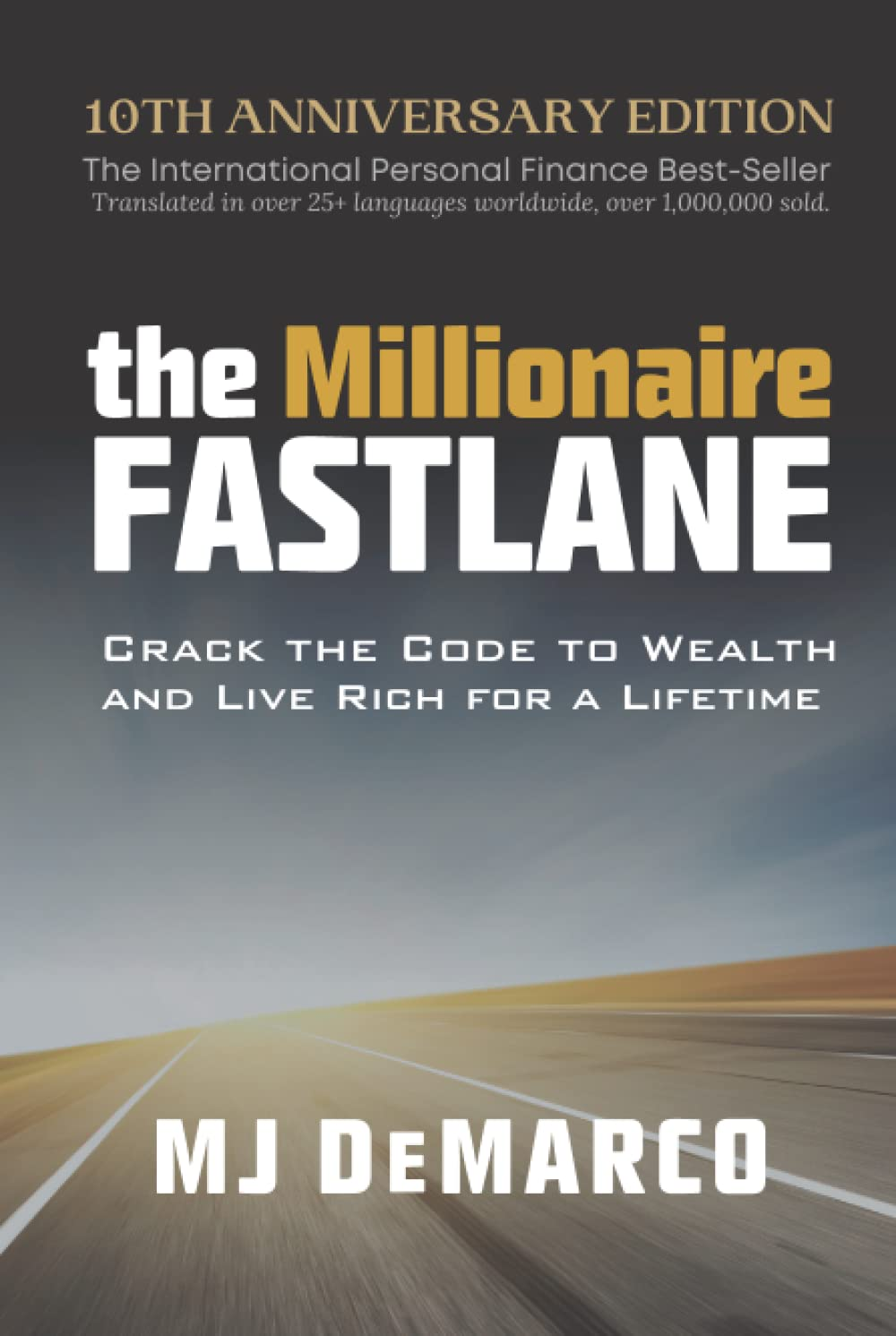
The Millionaire Fastlane

Finished Listening to…: The Millionaire Fastlane: Crack the Code to Wealth and Live Rich for a Lifetime by MJ DeMarco 📚

I just finished listening to The Millionaire Fastlane, and it turned out to be a fantastic book. At first, I wasn’t thrilled with the narrator’s approach. The fake character voices, aggressive delivery, and cheesy 1980s theme music between chapters nearly made me quit.

However, once I pushed through and focused on the actual content, I discovered the author was onto something interesting. While the advice came across as confrontational, at times, it was genuinely valuable. While I didn’t connect with every point he made, of course, I found plenty of items to add to my action list.

My favorite section was the concluding Chapter 45. This chapter effectively tied all the concepts together, despite the author’s heavy reliance on acronyms. But hey, if it helps the ideas stick, I’m all for it.

If you’re considering entrepreneurship, planning a side hustle, or thinking about launching your own business, I highly recommend this book. It’s reasonably short and packed with practical advice.

I’d strongly suggest keeping a notebook handy while reading, whether digital or physical, and jotting down key insights. Don’t transcribe everything, but capture what resonates with you. If you have the physical book, grab a pencil and actively engage with it. Underline important passages, write margin notes, dog-ear pages, and then transfer your thoughts into a tool like Obsidian to develop your own reflections based on what you’ve learned.

Body Farms

Warning! This post may not be suitable for all readers. Reader discretion is advised.

What It’s Like Watching Dozens of Bodies Decompose (for Science)

It sounds like a scene out of a horror film, but these places are real. They’re called taphonomic research facilities, or sometimes “body farms”—sites where forensic scientists study how the human body decomposes. (Don’t worry, the bodies are all donated.) By observing how fast cadavers break down in a controlled setting, investigators can learn more about decomposition and better pinpoint exactly what happened to dead bodies that are found in the real world.

A few years ago, I listened to an audiobook titled Stiff, and it was all about what happens to the human body after death. In this book, I learned about places where donated bodies are placed throughout the grounds of research facilities and exposed to various environmental conditions and the elements. The purpose is for scientists to study decomposition in order to train people in fields like forensics. Until that point, I had never heard of such a thing. Now I see that mainstream publications like Wired are shedding light on the topic. Although it’s morbid to think about, I find the science behind it all interesting.

Stealth Antennas

New ARRL Book Release: Stealth Antennas for Ham Radio

Stealth Antennas for Ham Radio is full of antennas to get you on the air no matter where you live. Even radio amateurs who live with antenna restrictions or covenant limitations will find solutions in this book.

Home Owner’s Associations (HOA’s) are such a nuisance for Amateur Radio operators (a.k.a. hams), that the Amateur Radio Relay League (ARRL) has produced an entire book to offer options on how to hide your antennas in these restricted communities. I wonder how these people will feel when a natural disaster hits and they rely heavily on the knowledge, expertise and dedication of these hams to bridge communications between them and the authorities in the area or around the world, so they can get the help they may desperately need.

Apple: The First 50 Years

In time for Apple’s 50th anniversary, “CBS Sunday Morning” correspondent David Pogue tells the iconic company’s entire life story: how it was born, nearly died, was born again under Steve Jobs, and became, under CEO Tim Cook, one of the most valuable companies in the world. The 600-page book features 360 full-color photos, new facts that correct the record and illuminate Apple’s subversive culture, and 150 fresh interviews with the legendary figures who shaped Apple into what it is today.

You know… I’m a fan of history and I’m also a fan of technology, especially Apple products. My favorite, and maybe because it was my first, has always been the “Sunflower” style G4 iMac. It was so beautiful and elegant.

So when I heard that David Pogue was coming out with a book about Apple’s first 50 years, it definitely caught my attention . I did a bit more digging and discovered that it’s going to be a coffee table style book, packed with history and pictures, featuring new interviews with the likes of Woz, and spanning over 600 pages. I figured… “why not?” and pre-ordered it.

It won’t be released until March 2026, which conveniently aligns with Apple’s actual 50th anniversary in April. I have a feeling it will be worth the wait. I’ll have to wait until next year to find out for sure, but I’m optimistic.

If you’re interested, you can check it out at the book’s official site. There, you can pre-order from various places, including Amazon, Target, and bookshop.com, among others.

Navigating Life with Low Vision

If you, or someone you know has low vision, you may want to take a look at this book… “Navigating Life with Low Vision” website Amazon

Although, I have not read it myself, it seems to be pretty comprehensive from the video review below. Odd that it is offered in regular print, large print and Kindle versions but not in audiobook format. Maybe it has a lot of illustrations that don’t translate well to audio? I am guessing that is it.

Follow Me On Mastodon | Buy Me A Coffee