Mastodon

Posts in "books"

"There Will Come Soft Rains"

Today is August 5, 2026, The “day after”. I came home from a long, physically exhausting day at work, scrolled through “the socialz,” and everyone was talking about the same thing: Ray Bradbury’s short story “There Will Come Soft Rains.”

Jason Snell pointed out that the irony of setting up Home Assistant in his house today was not lost on him. Then I saw a few more posts referencing the story, and I realized I had no idea what any of them were talking about. So I went looking.

In the version published in The Martian Chronicles, it’s titled “August 2026: There Will Come Soft Rains,” and it follows a fully automated smart house going about its daily routine on August 4, 2026, ending with a lone surviving wall repeating “Today is August 5, 2026” into the ruins. Bradbury borrowed the title from Sara Teasdale’s 1918 poem, written during World War I and the flu pandemic, about how nature would carry on just fine without us.

I found a reading of it by Leonard Nimoy (Yes, that Leonard Nimoy) on YouTube, originally released on Caedmon Records back in 1975. I listened to the whole thing, every depressing second of it. It left me feeling sad because it reminded me that humanity can produce beauty, and yet so often we choose not to.

The scene that stuck with me the most was the side of the house where the paint had been burned away except for five silhouettes: a man mowing the lawn, a woman bending to pick flowers, and two children reaching up toward a ball that never came down. Everyday life, etched in paint and outlined in ash. Cheer, joy, happiness…. a snapshot of their final moments.

At the risk of sounding more pessimistic, remember that tomorrow is promised to no one. Instead of just feeling sad about that, I want to actually do something with it.

  • Live today like it counts, because it might be the only one we get.
  • Enjoy the mundane moments. The dishes, the commute, the small talk. That’s most of life.
  • Make a real, intentional effort to make our own lives better.
  • Then turn around and make someone else’s life better too.

It’s easy to turn on the news and see nothing but gut-wrenching events happening around the world. But we are the reason the good and the bad happen. It’s easy to sit back, do nothing, and let life pass us by, but resist.

The great stuff in life is the hard stuff. If everyone on the planet could throw a 100 mile an hour fastball into the strike zone, nobody would care. It’s impressive precisely because it’s hard and almost nobody can do it.

Every single one of us is good, really good, at something. Go show it off. Make someone’s day.

#RayBradbury #ShortStories

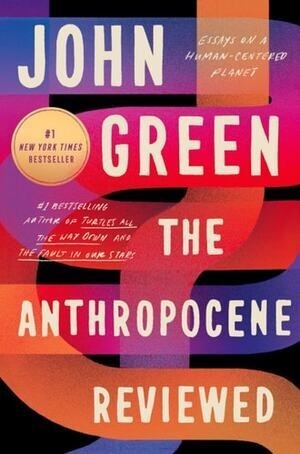
Finished Listening to…: The Anthropocene Reviewed: Essays on a Human-Centered Planet by John Green 📚

This book wasn’t even on my radar until I had to order it for my daughter’s summer reading assignment. It is definitely a stark difference between this book and Joan Didion’s “Slouching Towards Bethlehem: Essays” that I just finished, not too long ago. This book was not all happy, but it was definitely optimistic. Apparently he wrote it during the pandemic in 2020 so I’m guessing it landed like a tall glass of ice water in the desert. There was a lot of nostalgic references here for me. Those, combined with his optimism, made it a real fun listen. I’m glad I picked it up and read it alongside my daughter. It motivated her to read it as well and not just treat it as a school assignment that she had to get over with. 

Finished listening to…: Slouching Towards Bethlehem: Essays by Joan Didion 📚

This was a great book of essays, albeit, not always a happy one. It was a window into times and places that existed long ago, before my time. Didion’s writing is so vivid, that I can still “see” the portrayal of her experiences even after finishing it. The narrator, Maya Hawke, had a lot to do with this, of course.

I enjoyed the whole book, but the essays that resonated with me the most are:

  • On Keeping a Notebook
  • On Self-Respect
  • I Can’t Get That Monster out of My Mind
  • On Morality
  • On Going Home
  • Rock of Ages

#Essays #Books #JoanDidion

Finished Listening to…: How to Think Like a Roman Emperor: The Stoic Philosophy of Marcus Aurelius by Donald J. Robertson 📚

The audiobook, “How to Think Like a Roman Emperor” by Donald Robertson was narrated by the author himself, which is usually not my preference. However, Robertson did a fantastic job bringing the book’s message and tone to life. He spoke in a slow, clear voice with what I think is a beautiful Scottish accent. It felt like he was talking to me directly, in a dignified and elegant way.

I went in thinking the book was going to be all about Marcus Aurelius, his life, and how he lived. While it did touch on that, it wasn’t the main focus. The philosopher king was more of a framework Robertson used to hang his ideas about Cognitive Behavioral Therapy (CBT) and Stoicism, and how these seemingly modern fields actually have roots that stretch back hundreds, if not thousands, of years. The way of life that Marcus tried to embody is mirrored in many of the disciplines we use today to better ourselves.

There were so many valuable nuggets of wisdom packed into this book, all delivered through a narrative that kept the content moving and made it genuinely enjoyable to listen to. It wasn’t dry or boring at all. On the contrary, it was a pleasure to spend time with each day. All 8 hours and 47 minutes of it. In fact, I was left wanting more when it ended. One of my favorite morsels of wisdom was that “things do not affect us… the judgement of things affect us.”

The book was wonderful through and through, but the last chapter was the best. It was impactful and heartfelt. As soon as I finished, I paused to reflect on what I had just heard, and I wanted to start it all over again. I didn’t, because it was time to move on to something else, but I can definitely see myself revisiting it soon.

🎧 Listen to this post. Audio was generated using ElevenLabs.

#Stoicism #Audiobooks

Finished Listening to…: Apple The First 50 Years by David Pogue 📚

I really enjoyed this audiobook. David Pogue did a phenomenal job reading it himself. I especially enjoyed the actual audio clips he inserted of historical talks or Mac sound effects. There is also an easter egg in there 😉. I also purchased the hardcover version, so I can see the color pictures of things he talked about. I highly recommend it.

🎧 Listen to this post. Audio was generated using ElevenLabs.


#Apple #Audiobooks #DavidPogue

Empire of AI by Karen Hao

just finished listening to the audiobook “Empire of AI” by Karen Hao (wrapped it up on December 30, 2025), and I have to tell you, if you still think OpenAI is just a bunch of benevolent geniuses trying to save the world, you need to grab this book. Although the book focuses on OpenAI, this can probably be subsituted by any of the other major AI companies out there today.

Hao’s central metaphor is absolutely spot-on. She argues that OpenAI operates exactly like the old empires of history. It plunders resources (our data), exploits cheap labor from around the world, and drains natural resources from vulnerable countries, all to centralize power and wealth for a few chosen ones in Silicon Valley.

What really struck me was how quickly their mission took a U-turn. Remember when OpenAI started as a non-profit designed to fight the “evil” of Google’s DeepMind and protect humanity? Yeah, well, that didn’t last. As soon as Sam Altman and the leadership realized that compute costs billions, the “open” part of the name turned into a lie. They took a $10 billion investment from Microsoft, locked down their research, and basically morphed into the very thing they promised to destroy.

Then you have the “heroes” of the story, who come off as deeply flawed. Sam Altman doesn’t seem like a tech visionary here so much as a “steezy” politician and salesman. He apparently has a Napoleon complex (literally admiring the, self-proclaimed, emperor) and comes across as manipulative. The story of him getting fired by his own board via Google Meet while he was watching F1 in Vegas is something movies are made of. Then there’s Greg Brockman, a workaholic who treats the company like a cult. He just wants to be remembered at any cost. And Ilya Sutskever? He’s the “cerebral” genius who drank his own Kool-Aid with the mantra “Feel the AGI,” only to realize way too late that safety had taken a backseat to profit.

But honestly, the darkest part of the book is about how the “magic” is made. It is built on human suffering. Hao exposes how OpenAI outsourced the horrific job of filtering toxic content like violence and CSAM to workers in Kenya via a company called Sama. These people were left with severe PTSD. They also exploited desperate, highly educated Venezuelan workers for data annotation, paying them pennies.

It isn’t just human exploitation either. It’s environmental. In the race for compute power, they (along with Microsoft since OpenAI are using Azure services) are draining water in drought-stricken places like Chile and Uruguay just to cool their massive data centers. It is classic imperialism. They extract value from the weak to empower the strong.

The book ends with a warning that really stuck out. The only way to stop this empire is to decentralize it. We need to stop handing over our data and start supporting independent, transparent research. We can’t underestimate the power of the people, but as I noted while reading, we need to get off our asses and actually do something about it. If you care about privacy, labor rights, or just want to know who is pulling the strings behind the curtain, you should pick this one up for sure.


#Books #KarenHao #EmpireOfAI #OpenAI

Project Hail Mary

‘Project Hail Mary’: Release date, plot, cast, and everything we know about Ryan Gosling’s mission to save the world

“Project Hail Mary” is the next major Hollywood blockbuster to be adapted from the works of ‘The Martian’ author Andy Weir, and this time it’s Ryan Gosling’s turn to “science the s**t” out of another cosmic conundrum.

I remember listening to The Martian by Andy Weir and absolutely loved it. The movie was okay, but I preferred the audio book. Then I heard Steve Gibson talking about how good Project Hail Mary was, on a Security Now podcast, so I picked up that audiobook as well. I’m so glad I did because the story was fantastic on its own, but the audiobook had some extra sound effects that made the story come to life even more. Hearing that the movie is now imminent, I can’t wait to see it. It makes me want to listen to the audiobook once more before then. Maybe I’ll carve out some time to do just that.

The Millionaire Fastlane

Finished Listening to…: The Millionaire Fastlane: Crack the Code to Wealth and Live Rich for a Lifetime by MJ DeMarco 📚

I just finished listening to The Millionaire Fastlane, and it turned out to be a fantastic book. At first, I wasn’t thrilled with the narrator’s approach. The fake character voices, aggressive delivery, and cheesy 1980s theme music between chapters nearly made me quit.

However, once I pushed through and focused on the actual content, I discovered the author was onto something interesting. While the advice came across as confrontational, at times, it was genuinely valuable. While I didn’t connect with every point he made, of course, I found plenty of items to add to my action list.

My favorite section was the concluding Chapter 45. This chapter effectively tied all the concepts together, despite the author’s heavy reliance on acronyms. But hey, if it helps the ideas stick, I’m all for it.

If you’re considering entrepreneurship, planning a side hustle, or thinking about launching your own business, I highly recommend this book. It’s reasonably short and packed with practical advice.

I’d strongly suggest keeping a notebook handy while reading, whether digital or physical, and jotting down key insights. Don’t transcribe everything, but capture what resonates with you. If you have the physical book, grab a pencil and actively engage with it. Underline important passages, write margin notes, dog-ear pages, and then transfer your thoughts into a tool like Obsidian to develop your own reflections based on what you’ve learned.

Follow Me On Mastodon | Buy Me A Coffee