Mastodon

Plotter

My wife always says I have expensive hobbies, like photography and ham radio, and now I’m afraid I’m falling into another one: the analog world of premium notebooks, paper and pens.

I’ve always loved notebooks and writing things down, no matter where I am. But I’ve always stuck to cheaper options from Target or Barnes & Noble. I never actively sought out anything fancy because I was afraid I’d buy something beautiful and then never want to write in it. My goal has always been simple: have something where I can jot down thoughts as a temporary holding place before moving them somewhere more permanent, maybe even digital. At the same time, I’ve always appreciated the beauty of leather-bound notebooks and fountain pens. Right now, that’s where my interests are leaning.

I always carry a Field Notes notebook with me. I have one in pretty much every bag I own: my laptop bag, my iPad sleeve, you name it. But I’ve always wished these little notebooks had one feature: the ability to move pages around or tear them out without damaging the staples. Well, I think I found something that might work for me.

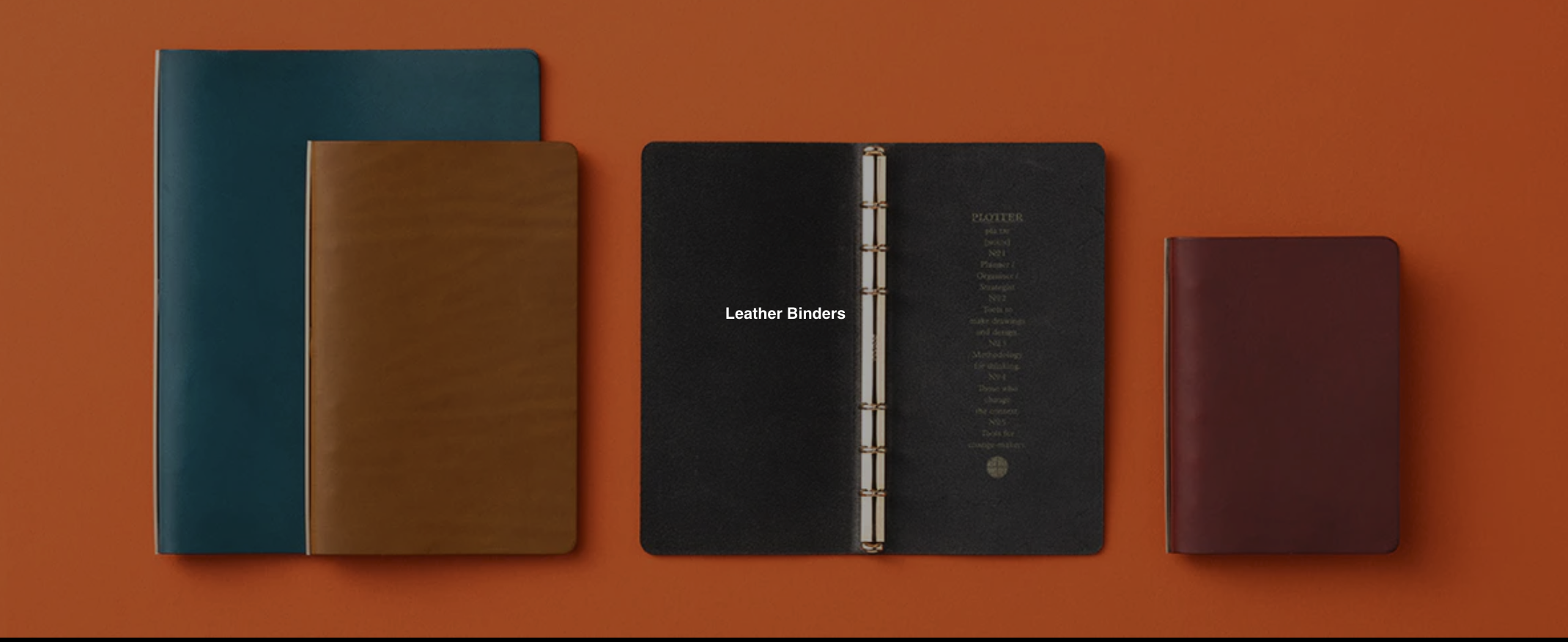
It’s from a company called Plotter, and they sell leather-bound binder systems ranging from pocket size to full notebooks. I’ve been eyeing them for about a year now but never pulled the trigger because they’re pretty pricey.

Today, that changed. I decided to go for it and ordered the Plotter Mini, which is about the same size as a Field Notes notebook but features a five-ring (or is it six-ring?) metal spine that accepts their refills. Along with the Plotter Mini, I grabbed some unlined refills, grid refills, blank refills, and a lifter (basically a hard plastic divider that protects your paper, while giving you a solid writing surface). Plotter says it’ll take about five to six days to prepare the order before shipping, so I’m expecting it in the next two weeks. or so

I’m excited to try it out and see how this system works for me. I think it’ll be a perfect match since it’s flexible: I can refill, change papers, or move things around as needed.

Hey, at least I didn’t go down the route of expensive fountain pens, yet. Maybe that’s next?
Retinal Implant

This retina implant lets people with vision loss do a crossword puzzle

Thirty-eight patients in Europe received a PRIMA implant in one eye.

I’m always on the lookout for articles or videos about the latest technology to improve vision loss, suffering from it myself. This particular technology consists of a chip implanted in the human eye, designed to provide vision gain using an external camera mounted on a pair of glasses. It allows someone with peripheral vision but no central vision to make things out.

In this particular study, researchers implanted the chip in 38 different people. On average, participants were able to read five more lines on the eye chart, each line getting progressively smaller.

That’s amazing to me because even seeing one line below my current level would be a Herculean feat. I assume it’s the same for these people suffering from low vision.

It reminds me of Ray Kurzweil’s book The Singularity Is Near, where he argues that the technology we have as humans will one day merge with us to create a superhuman. He continues by saying that eventually, we will lose our humanity and human traits and become all cyborg, if I remember correctly. I don’t like that part, but I do subscribe to the idea of using advanced technology to improve our quality of life, like in this case.

I understand it’s not perfect because it requires a chip implanted in your eye as well as an external camera to help you see. But if you’ve ever met or spoken to someone with a visual impairment, you quickly discover that we already have to use a lot of external technology, and usually, it’s very bulky and extremely expensive because it’s in that vertical market.

I have my hopes set high for this kind of study and these trials. To me, it always seems like this field is stagnant, but that’s only because I want it to speed up and come up with a permanent solution for all people with visual impairments.

1972 Moon Samples

Scientists open untouched Apollo 17 lunar samples from 1972 — they may hold clues about the moon’s violent origins

When the six Apollo missions that landed on the moon returned home, some samples of lunar rocks and regolith they brought with them were stored, pristine and unopened. This is because scientists wanted to preserve them for a later date when more advanced instruments could be used for their analysis.

This is amazing. I can’t even imagine the excitement that these scientists must be feeling to study these samples. It is like going back in time in more ways than one. First, they are taking a short trip back to the Apollo missions of 1972. Then, continuing thousands of years as they make new discoveries of the different chemical signatures they find in each layer of rock sample. I hope that waiting for today’s technology will prove worth it for them.

Local Tavern

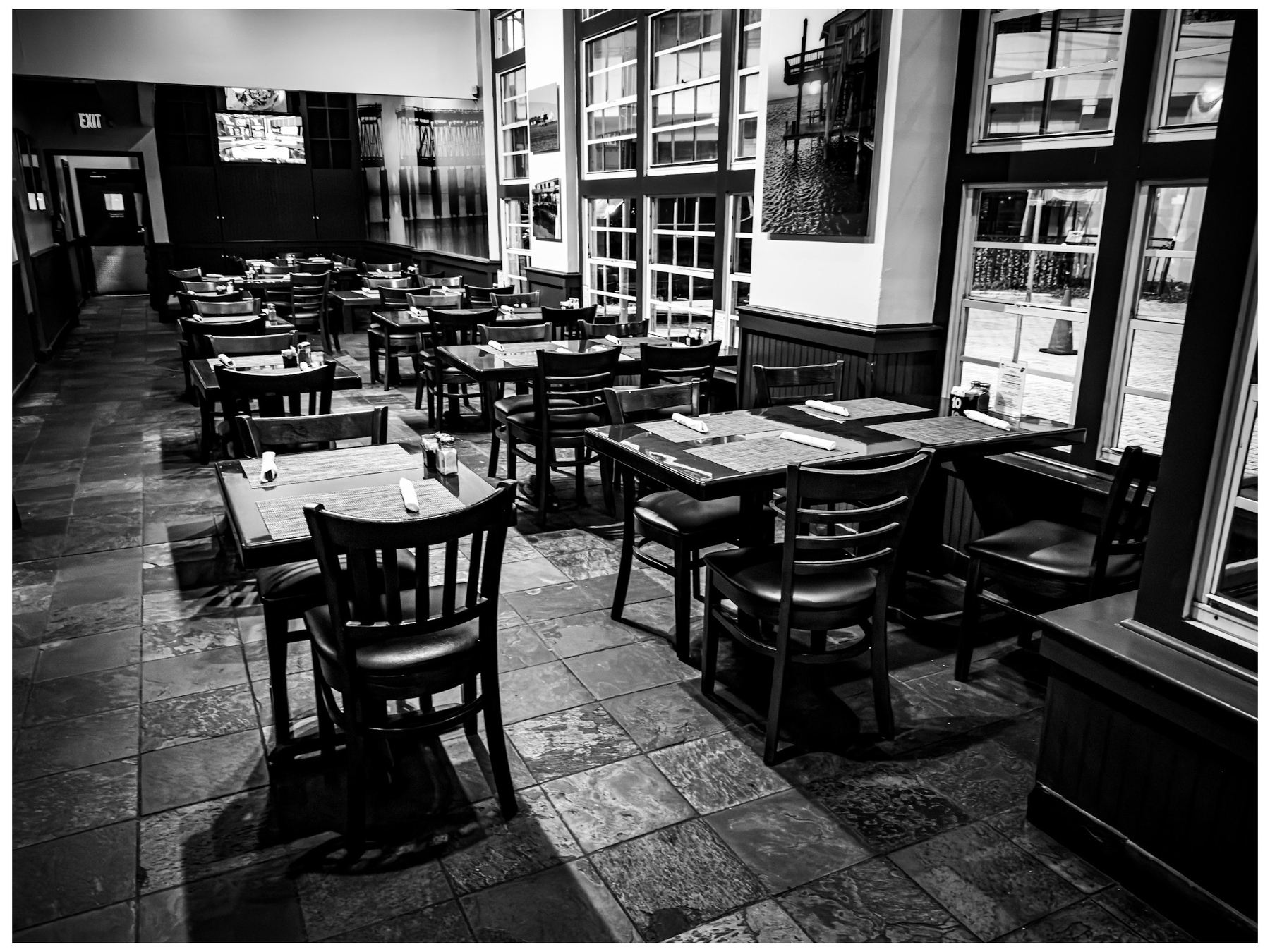
We went out for an early dinner at this little tavern that’s been around since 1988. They almost shut down last month but somehow pulled through and are still open for business.

As we were walking out, I noticed a corner of the tavern that reminded me of a scene from The Godfather. It has that old-world charm and atmosphere. Although it’s not as old as the movie, it feels frozen in time.

For a moment, it didn’t feel like we were anywhere local. We could have been in a different part of the country entirely. It was a great experience, and I plan to visit again soon.

A black and white photograph depicts an empty restaurant with neatly arranged tables and chairs.

Sea of Clouds

I was sitting in my truck waiting for my wife, looking around at what seemed like an ordinary, mundane scene. Everything was quiet. On a whim, I decided to open the sunroof. When I looked up, I saw this beautiful sea of clouds stretching across the sky. I pulled out my phone and captured the moment.

Sometimes you have to look up to see what you’ve been missing all along.

Like me, you might be pleasantly surprised and grateful for taking just a second to yourself. Eliminating all the noise and appreciating what’s always been around you.

Clouds in a vibrant blue sky are partially framed by silhouetted tree branches.

Neo Network Utility 2.0

I’m always on the lookout for great apps that make my life easier. I recently discovered one from DEVONTechnologies, one of my favorite companies and the makers of excellent apps like DEVONthink.

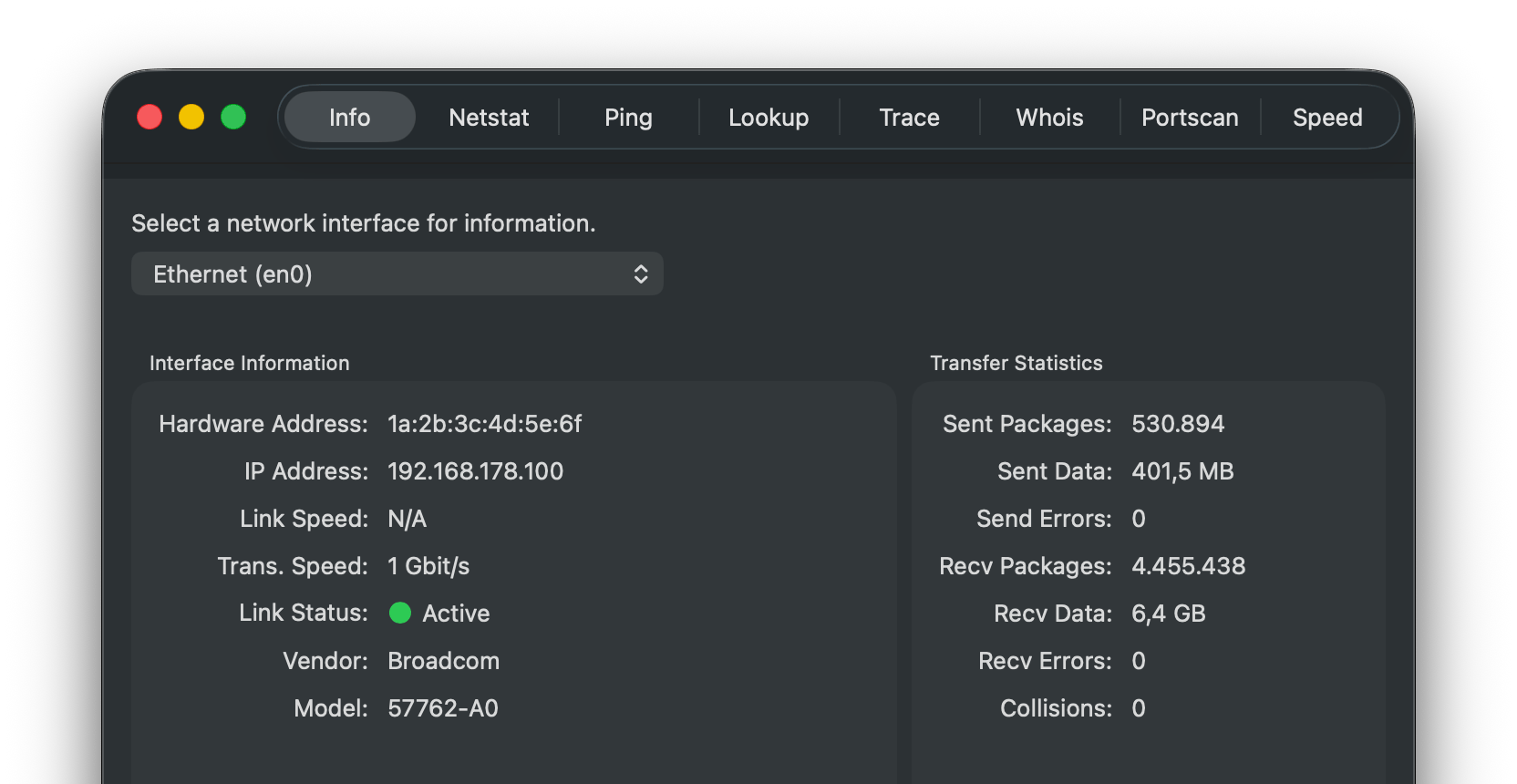
This utility is packed with features that are incredibly useful when diagnosing or testing things on your network. It’s called Neo Network Utility 2.0, and it’s essentially a graphical user interface for many of the diagnostic tools and informational properties you might need. 1

For example, there’s an Info tab that lists all your network adapters for wired and wireless connections. It provides information like the MAC address for each adapter, shows you which one is active, and if you’re looking at a wireless connection, it even displays the SSID.

You can view Netstat information, ping remote devices to verify they’re reachable from your machine, perform lookups for different IP addresses, and run Whois queries to see the registration information tied to specific domain names.

One of my favorite diagnostic techniques is running a trace route to see where a connection starts and stops. This helps me verify that traffic is flowing from point A to point B as expected. If it’s not, I know exactly where to start troubleshooting.

Another invaluable tool is the port scanner. You can scan your local machine or a remote machine you’re troubleshooting. For instance, if you want to confirm that your Plex server is listening on port 32400, a quick scan will tell you immediately. If it’s not responding, you know where to begin your diagnostic procedure.

Last but not least, I use the built-in speed test all the time. While I typically rely on fast.com or speedtest.net, having one built right into the app is incredibly convenient. It may not be as flashy, but the information I need is clearly displayed, and that’s what matters.

Overall, it’s a fantastic app, and the best part? It’s 100% free

A network interface information window displays details such as IP address, link speed, link status, vendor, model, and transfer statistics for an Ethernet connection.

Goose

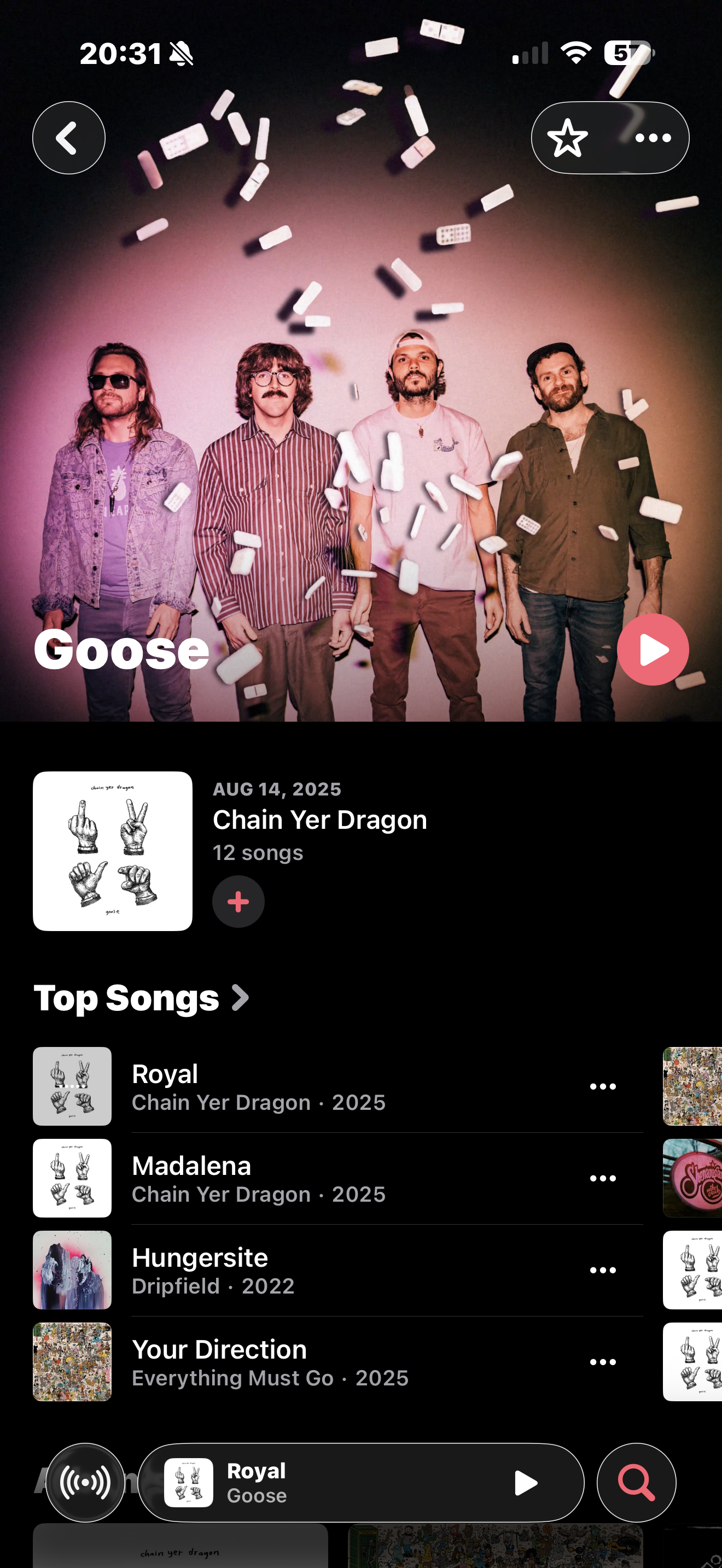
I heard about a band named Goose from Marco Arment on the Accidental Tech Podcast the other day, so I started listening. I like them a lot, so far.

Checked them out on Apple Music, Bandcamp or your favorite streaming service of choice. Heck… knock yourself out andg o buy the physical album.

Baofang UV-5R Mini

Every ham is familiar with the brand Baofeng. Most of us probably started with a Baofeng UV-5R as one of our first radios, before moving on to more expensive units. When I got my ham ticket, I wasn’t sure if I was even going to like the hobby, so I bought a $25 Baofeng and used it for a bit while I got comfortable talking on the radio and learning the ropes.

Since then, I’ve moved to more expensive radios from Yaesu, Icom, and Kenwood, but for some reason I always return to the Baofeng for certain situations. For example, when we go out to Field Day, I’d rather have a cheap, inexpensive radio that I can use without risking getting it wet, dropping it, or losing it (like I have in the past). Thank God that was just a Baofeng I lost, not one of the pricier radios.

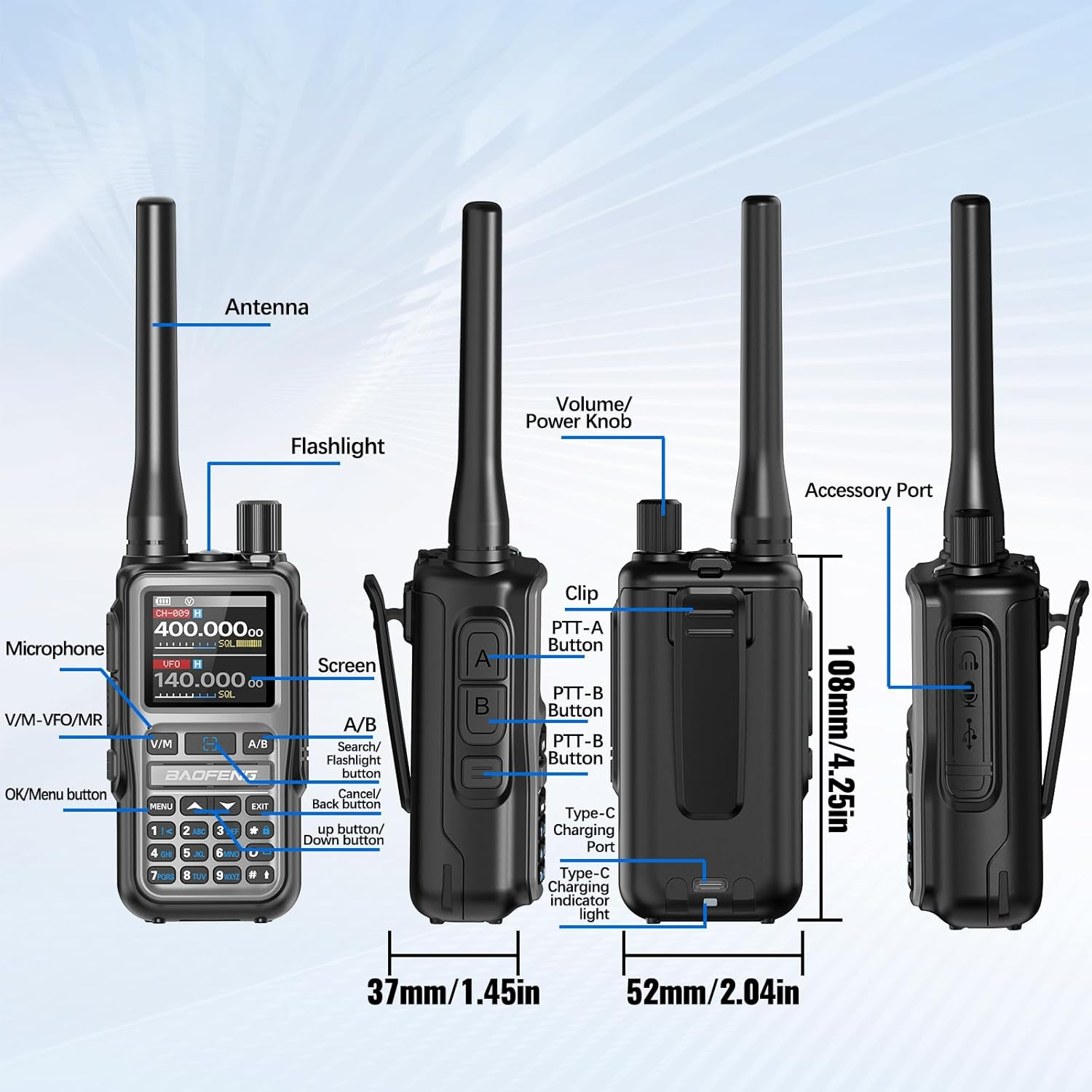
My latest addition to the Baofeng collection is the Baofang UV-5R Mini ham radio. It’s a simple VHF/UHF dual-band radio that feels solid in the hand despite being very small. It has a built-in broadcast radio, weather channels, the mandatory Baofeng flashlight, and a great-looking little screen. For about $23 each when you buy a pack of two, I think it’s well worth the investment.

I’m going to add it to my stash of inexpensive radios that I can throw in the truck or take with us on family outings, since most of my family are hams themselves. I haven’t tried this yet, but some people say it’s possible to communicate on GMRS frequencies. However, transmitting on GMRS without a GMRS license is illegal (the Baofeng exceeds FRS power limits), though listening is perfectly fine.

For example, monitoring your local fire department for situational awareness is always a ham favorite.

The revamped menu on this radio is pretty good too. I think it’s the display that makes the difference, because the old Baofeng radios were just horrible for me to see. This screen is vibrant and looks really refined compared to older models. Now, the last thing for me to do is try them out and see if they do what they’re supposed to do: transmit and receive. Let’s see how sensitive they are and whether they discriminate against spurious emissions.

Photo courtesy of Amazon.com

Editing High Quality Videos

Some YouTube channels, like MKBHD, produce truly great content. What makes it great? The production value of their videos is consistently top-tier. In a recent video, “The MKBHD Method™ For Editing High Quality Videos,” his team gives us a sneak peek into what it takes to achieve this level of quality. It’s essentially a mini masterclass in what happens after the video is captured.

They cover everything: taking raw footage and crafting the most compelling story possible, color grading to enhance the visual appeal, adding motion effects, and much more. One of my favorite parts was when they discussed audio, including music selection and voice treatment. They make it look so easy, but you can clearly see that it is not.

Follow Me On Mastodon | Buy Me A Coffee